
04 Nov 25 Best Fashion Photography Poses for Models & Clothing Brands
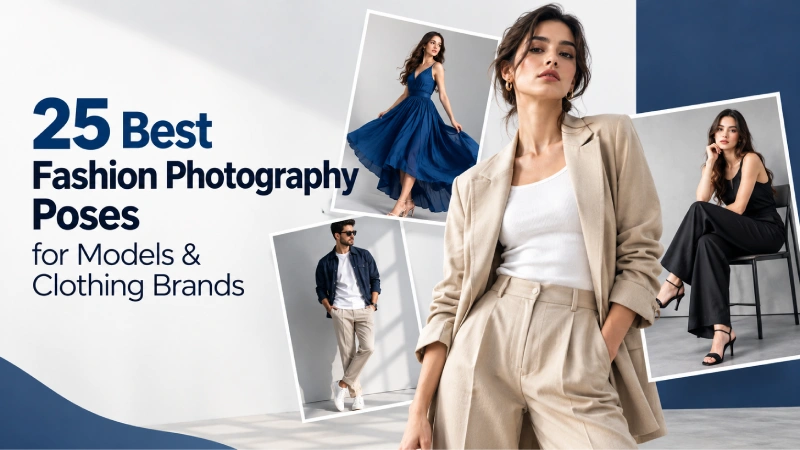
The best fashion photography poses for models and clothing brands balances visual appeal with clear clothing presentation. Models right poses help communicate a garment’s silhouette, demonstrate how fabric falls, and reveal details that shoppers or campaign audiences need to see.
In e-commerce photography, consistency and product visibility are essential; editorial and lookbook shoots allow more creative expression. This guide covers 25 best fashion photography poses, including standing, seated, leaning, movement-based, and editorial styles, to help you choose poses that match the clothing and the brand’s goals.
Discover how to execute each pose, select suitable options for ecommerce and lookbooks, prepare reference boards, and direct movement to capture clothing naturally.
What Makes a Good Fashion Photography Pose?
A good fashion photography pose combines natural posture, balanced body angles, and appropriate expressions to create appealing images. In fashion product photography, poses should highlight a garment’s fit, shape, fabric, and design details.
Hand placement and body positioning should complement the clothing without distracting from it. The right pose also depends on the shoot’s purpose, whether showcasing products for ecommerce or expressing a brand’s style in a fashion campaign.
How to Prepare for Fashion Posing
Preparing for fashion posing requires directing the model, highlighting the clothes rather than just the person, and planning your shots ahead of time.
However, before planning how to pose for fashion photography, here are key factors you must follow:
Define the Purpose of the Shoot
First, determine whether the shoot is for ecommerce product pages, a fashion lookbook, an advertising campaign, or an editorial story. Ecommerce photography prioritizes garment visibility and consistent angles, while editorial shoots allow more expressive poses and creative compositions. Share the objective with the model and creative team so everyone works toward the same visual goal.
Identify the Garment's Priority
Examine the garment before choosing poses. Identify the features that need attention, such as the silhouette, neckline, sleeves, pockets, fabric texture, or back design. Plan poses and camera angles that reveal these details without bunching the fabric or hiding important elements. For complex garments, prepare a shot list to ensure you photograph every key feature.
Create a Pose Reference Board
Build a Pinterest fashion model poses mood board; study client brand identity and e-commerce layout requirements. For the posing reference board, collect photos from fashion campaigns, professional lookbooks, and photography portfolios. Include a few creative portrait photography ideas for close-ups and expressive shots. Share the reference board with the model, stylist, and makeup artist before the shoot to establish a consistent visual direction.
Begin With a Base Pose
Start with a simple standing or seated pose that suits the garment. Adjust the model’s posture, weight distribution, shoulders, hands, and head position before introducing more complex movements. Once the base pose looks natural, make small changes to the arms, legs, gaze, or body angle. This approach gives beginners a reliable starting point and helps photographers capture multiple variations efficiently.
Direct Movement With Clear Action Cues
Instead of asking models to pose without guidance, give them specific actions such as walking toward the camera, turning slowly, adjusting a jacket, or looking over one shoulder. Use short, clear directions and capture several frames during each movement. For flowing garments, observe how the fabric responds and adjust the movement speed to achieve the intended effect.
Plan Camera Angles and Shot Sizes
Decide which views are necessary before the session begins. Capture full-body images to show the complete outfit, medium shots to emphasize styling, and close-ups to reveal fabric texture or construction. Experiment with eye-level and low-angle perspectives when appropriate, but check that wide-angle lenses and camera placement do not distort the model’s proportions or misrepresent the garment.
Prepare the Garments and Styling Kit
Inspect each outfit before shooting for wrinkles, loose threads, lint, and misplaced labels. Keep a lint roller, clips, safety pins, and a suitable garment steamer available for quick styling adjustments. Check collars, cuffs, waistbands, and hems between poses. These small preparations help maintain a consistent appearance throughout the shoot and reduce interruptions.
Review Test Shots
Capture a few test frames and review them at full size before moving to the next setup. Check garment visibility, focus, exposure, fabric folds, hand placement, and the space around the model. Correct issues early, then repeat successful poses across similar products when catalog consistency is important.
25 Best Fashion Photography Poses for Models & Clothing Brands
The best fashion photography poses depend on the garment, shoot type, and desired visual style.
From editorial compositions to e-commerce catalog shots, explore trendy and professional fashion photographers recommended 25 poses to highlight clothing details, create natural expressions, and maintain a consistent brand aesthetic.
Standing fashion poses help models showcase clothing while giving photographers control over posture, angles, and composition. The best pose depends on the garment, the shoot’s purpose, and the brand’s style.
These options work for ecommerce catalogs, fashion lookbooks, and editorial shoots.
1. Straight-On Power Stance
Ask the model to face the camera with feet comfortably apart, shoulders relaxed, and arms resting naturally. Keep the posture upright without making it look stiff. This pose works well for full-length clothing shots, helping brands present the garment’s overall silhouette, length, and fit clearly.
2. Three-Quarter Turn
Position the model at an angle of approximately 45 degrees to the camera, with the head turned toward the lens or slightly away. This angle adds dimension and helps photographers capture the garment’s shape from a different perspective. It works particularly well for dresses, jackets, tailored outfits, and fashion portraits.
3. Weight Shift With One Knee Bent
Ask the model to place most of their weight on one leg while relaxing the opposite knee. Keep the hips and shoulders natural to create a comfortable, asymmetrical stance. This pose adds movement and softness to the composition while showing how the garment falls around the waist, hips, and legs.
4. Crossed-Leg Standing Pose
Another popular pose for clothing brands is the crossed-leg standing pose. Have the model cross one leg slightly in front of the other while maintaining a relaxed upper body. Avoid crossing the legs too tightly, as this can make the stance look awkward or obscure the clothing. This pose suits dresses, trousers, skirts, and lifestyle fashion photography where an elegant, elongated silhouette is desired.
5. Hands-on-Hips Pose
Ask the model to place their hands lightly on their hips, keeping the elbows relaxed and slightly away from the body. This creates a confident stance and adds definition to the waistline. It works well for structured garments, fitted dresses, jackets, and activewear, but ensure the hands do not cover important design details.
6. Over-the-Shoulder Look
Position the model with their body turned away from the camera and ask them to look back over one shoulder. Keep the neck relaxed and the shoulders natural. This pose adds visual interest while showcasing back details, shoulder construction, collars, and garment drape. It is especially useful for lookbooks, editorial photography, and fashion campaigns.
Seated and leaning poses add variety to fashion photography while creating relaxed, editorial, or lifestyle-focused images. Photographers can use these poses to highlight garment structure, fabric drape, and styling while adapting the composition to the clothing brand’s visual identity.
7. Edge-of-the-Chair Pose
Ask the model to sit near the front edge of a chair with their back straight, feet positioned naturally, and shoulders relaxed. Adjust the leg placement to suit the outfit and keep the fabric from bunching unnecessarily. This pose works well for tailored trousers, blazers, dresses, and professional fashion portraits.
8. Sideways Chair Pose
Position the model sideways on a chair, with their legs angled to one side and their torso turned slightly toward the camera. The model can rest one arm lightly on the chair for balance. This creates a more dynamic composition and works well for editorial shoots, casual collections, and lifestyle campaigns.
9. Floor-Seated Pose
Have the model sit on the floor with their legs folded, extended, or arranged asymmetrically according to the outfit. Keep the upper body relaxed and ensure the pose does not hide important garment details. This pose suits casualwear, denim, streetwear, and creative fashion editorials.
10. Wall-Leaning Pose
Ask the model to lean lightly against a wall, keeping their shoulders relaxed and one leg slightly bent if comfortable. Avoid pressing the body so firmly against the wall that the clothing becomes distorted. This pose works well for streetwear, casual collections, and minimalist fashion photography.
11. One Foot Against the Wall
Another effective fashion pose for beginners is to position the model with their back or shoulder near the wall and one foot resting against it, with the knee bent naturally. Keep the other foot firmly on the ground for stability. This relaxed pose is effective for denim, sneakers, casualwear, and youth-oriented fashion campaigns.
Movement-based poses add energy and natural expression to fashion photography. They help photographers capture how garments move, fall, and respond to body motion. These poses work particularly well for fashion campaigns, lookbooks, lifestyle shoots, and short-form social content.
12. Walk Toward the Camera
Ask the model to walk naturally toward the camera with relaxed shoulders, a comfortable stride, and a confident expression. Capture several frames to show the garment in motion without forcing an exaggerated walk. This pose works well for full-length outfits, trousers, dresses, and outerwear.
13. Walk Across the Frame
Have the model walk from one side of the frame to the other while keeping their posture natural. Photograph the movement from a side or three-quarter angle to show the garment’s silhouette and drape. This pose is especially useful for showcasing flowing dresses, wide-leg trousers, coats, and casual collections.
14. Walk Away and Look Back
Ask the model to walk away from the camera and turn their head slightly over one shoulder. This creates a candid, editorial feel while revealing the back of the outfit. It works particularly well for jackets, dresses, coats, and garments with distinctive back details.
15. Dress or Skirt Twirl
Ask the model to make a controlled turn that allows the skirt or dress to move naturally. Use a suitable shutter speed to capture either crisp fabric details or intentional motion blur. This pose highlights the garment’s volume, flow, and movement, making it ideal for dresses, skirts, and occasionwear.
16. Jacket or Coat Swing
Have the model walk or turn while gently swinging an open jacket or coat. Capture the fabric as it moves away from the body, revealing its lining, shape, and construction. This pose suits outerwear campaigns and editorial shoots, but the movement should not obscure important garment details.
17. Hair or Head-Turn Movement
Ask the model to turn their head naturally, allowing the hair to follow the movement. Capture a sequence of frames to select the most flattering expression and movement. This technique adds energy to beauty-focused fashion portraits and campaign images, especially when the styling and clothing remain clearly visible.
Editorial fashion poses emphasize artistic expression, distinctive silhouettes, and visual storytelling. Photographers use body angles, camera perspective, and carefully controlled movement to create images that communicate a collection’s mood and brand identity.
18. Angular Body Pose
Give model direction to create defined lines by bending one arm, shifting the hips, or positioning the shoulders at different angles. Keep the pose intentional rather than forcing uncomfortable positions. This technique works well for avant-garde editorials, structured outfits, and fashion campaigns that emphasize shape and styling.
19. Low-Angle Power Pose
Position the camera slightly below the model’s eye level and ask them to stand tall with a confident posture. The lower perspective can make the model appear more commanding and emphasize long silhouettes. This pose suits dramatic outerwear, tailored suits, and high-fashion editorials, but avoid distortion that misrepresents the garment.
20. Torso Twist
Instruct the model to turn their upper body slightly in one direction while keeping their hips angled differently. Keep the movement comfortable and natural to create visual tension without excessive twisting. This pose adds dimension to fashion portraits and helps showcase waistlines, garment construction, and the shape of fitted clothing.
21. Controlled Back Arch
Have the model gently extend their upper back while keeping their shoulders relaxed and their balance stable. Avoid forcing the lower back into an exaggerated arch. This pose can create an expressive silhouette for editorial portraits, eveningwear, and fitted garments while maintaining a natural, comfortable posture.
22. Prop-Assisted Pose
Incorporate a chair, stool, umbrella, bag, or other relevant prop to give the model a natural interaction point. Ask them to hold, lean against, or move around the prop without allowing it to obscure important clothing details. This approach adds context and visual interest to editorial shoots while supporting the story behind the collection.
Ecommerce model poses and lookbooks help clothing brands present products clearly while maintaining a consistent visual style. Unlike expressive editorial poses, these poses prioritize garment visibility, accurate fit, and useful viewing angles. For more inspiration, explore these clothing photography ideas to plan product shots and lookbook images.
23. Front, Side, and Back Catalog Sequence
Photograph the model from the front, side, and back using consistent posture, framing, and lighting. This sequence helps shoppers assess garment shape, length, fit, and back details before purchasing. It works especially well for ecommerce catalogs featuring jeans, dresses, jackets, and other apparel where construction and fit influence buying decisions.
24. Three-Quarter Ecommerce Pose
Position the model at a slight angle to the camera while keeping the garment’s key features visible. This view adds depth without hiding important details such as waistlines, pockets, seams, or sleeve shape. Use it as a supporting image alongside front and back views to give shoppers a more complete understanding of the product.
25. Detail-Focused Clothing Pose
Direct the model to position their body or hands to highlight specific garment features, such as a collar, cuff, waistband, pocket, or neckline. Frame the shot closely enough to reveal the details without awkwardly cropping the product. These images complement full-length catalog photos and help shoppers evaluate design elements, fabric texture, and finishing.
How to Direct a Fashion Model Naturally
To direct a fashion model naturally, establish a relaxed environment, give clear verbal and physical cues, and use movement or storytelling instead of forcing static poses.
Here is a breakdown of how fashion photographers communicate and evoke natural movement and emotion on set:
- Give specific narratives: Evoke genuine expressions by giving a simple scenario or feeling (e.g., pretending it is cold, running for a bus, or recalling a fun memory) rather than saying “look happy”.
- Demonstrate the pose: Show the intended body angle or hand placement when verbal instructions are unclear. This helps beginners understand the movement without repeatedly guessing.
- Establish a friendly communication: Ask models to walk, adjust a jacket, turn around, or interact with accessories. These actions create natural transitions and reduce stiff, repetitive poses.
- Direct facial expressions and eye contact: Guide the model’s gaze and expression according to the shoot’s mood, whether it calls for a relaxed lifestyle look, a confident campaign image, or a dramatic editorial portrait.
- Adjust poses to the garment: Check that arms, legs, and body angles reveal important clothing details. Refine the position if fabric bunches, pockets become hidden, or the garment’s silhouette looks distorted.
- Keep feedback positive: Praise what works using encouraging reinforcement instead of saying “that’s wrong” or “I don’t like that,” which causes models to withdraw.
Must avoid:
- Don’t touch the model’s body or clothing without explicit permission; mirror the pose yourself or use verbal directions instead.
- Don’t assume the model knows your left from your right—mirror your own movements or point directly to the spot you want them to adjust
Common Fashion Posing Mistakes
For models, fashion photographers, and clothing brands, common posing mistakes include awkward body positioning, stiff expressions, and poses that hide garment details.
Other common fashion posing and presentation mistakes are:
- Closing off the profile: Letting the shoulder facing the camera stay high and square instead of dropping it, rolling it back, and leaning slightly forward. This creates a flat silhouette and draws the eye to the arm or clothes rather than the face.
- Ignoring body proportions and volume: Pairing oversized, baggy denim or heavy top layers without structural control, which collapses the natural shape of the body.
- Stiff or unanchored hands/limbs: Letting arms hang dead against the torso or placing hands in awkward, tense positions that break the flow of the silhouette.
- Bad background and garment color matching: Posing against backgrounds that clash with or match the color/pattern of the outfit, making the clothing blend into the environment.
- Slouching or fighting the clothes: Wearing made-to-order or custom pieces with poor posture, which ruins clean shoulder seams and the intended fall of the fabric.
Check out the best fashion photography poses for models and clothing brands to fix those mistakes.
How to Refine Fashion Photos After the Shoot?
Refining fashion photos after a shoot involves a structured, multi-phase post-production workflow that balances global image data enhancements with precise detail work on skin, hair, and garments.
Professional photo retouching services can refine the following details to prepare fashion images for ecommerce stores, lookbooks, and campaigns:
- Color Correction: Maintain accurate garment colors and consistent tones across product images.
- Fabric and Texture Refinement: Enhance visible fabric texture, stitching, and material details without making them look artificial.
- Wrinkle and Crease Removal: Reduce distracting wrinkles while preserving natural folds that represent the garment’s fit and drape.
- Skin Retouching: Minimize temporary blemishes while retaining natural skin texture and features.
- Background Cleanup: Remove unwanted distractions and create clean, consistent backgrounds.
- Garment Edge Refinement: Clean uneven edges, stray threads, and minor imperfections without changing the garment’s shape.
- Lighting and Exposure Adjustment: Balance highlights, shadows, and brightness to reveal clothing details clearly.
From color inconsistencies to wrinkles on fabric, when the retouching is done well, none of those are visible. The apparel image looks professional and eye-catching. Masking Aid’s retouchers handle everything from simple dust removal to complex beauty airbrushing and editorial polish. Every edit is done manually and delivered within the estimated time.
Explore our e-commerce retouching services to get started!
FAQs
What is fashion photography?
Fashion photography is a specialized genre of photography dedicated to displaying clothing, shoes, haute couture, and beauty products in a visually compelling way.
What are some key elements to consider when posing in fashion photography?
Key elements to consider when a model poses for fashion photography are body angles, limb spacing, facial direction, and garment focus. Follow our 25 best clothing photography poses.
What are the best fashion poses for e-commerce photography?
The best fashion poses for e-commerce photography must be clean, structured, and minimal to keep the primary focus entirely on the garment's fit, cut, and texture. Unlike editorial fashion poses, e-commerce posing requires a strict structure to display how clothes look, move, and drape on a real body.
How can fashion photos be improved after a photoshoot?
Improving fashion photos after a photoshoot requires a clean, layered post-processing workflow that separates global corrections (color and lighting) from localized refinement (garments and skin). Have a bulk photo retouching project in mind? Contact us or enjoy a free trial today!
How much does fashion e-commerce photo retouching cost?
Fashion e-commerce photo retouching costs $0.29 per image when you outsource to Masking Aid, a renowned photo editing company. However, the costs also vary based on the complexity of high-end fashion and apparel retouching.
Conclusion
The best fashion photography poses balance visual appeal with garment visibility. Whether you’re shooting ecommerce catalogs, lookbooks, or editorial campaigns, choose poses that complement the clothing, reflect the brand’s identity, and feel natural. With the right preparation, confident model direction, and careful editing, you can create polished fashion images without compromising the garment’s authentic appearance.
